
Table of Contents
- Best Apps to Help With Social Anxiety: Quick Comparison
- Clarity Flow Tools: App-Free Workbooks for Social Anxiety
- MindShift CBT and FreeCBT: Free Cognitive Behavioral Therapy Tools
- Headspace and Calm: Mindfulness and Meditation for Anxiety
- 7 Cups and Cues: Peer Support and Social Skills Training
- Social Anxiety Exposure Therapy Exercises You Can Do With an App
- Social Anxiety Coping Scripts for Real Conversations
- Best Practices for Managing Social Phobia With Digital Tools
- Frequently Asked Questions
Last Updated: October 3, 2026
Best Apps to Help With Social Anxiety: Quick Comparison
Finding apps to help with social anxiety starts with knowing what each tool actually does. Some teach cognitive behavioral therapy skills. Others focus on mindfulness, peer support, or social skills training.
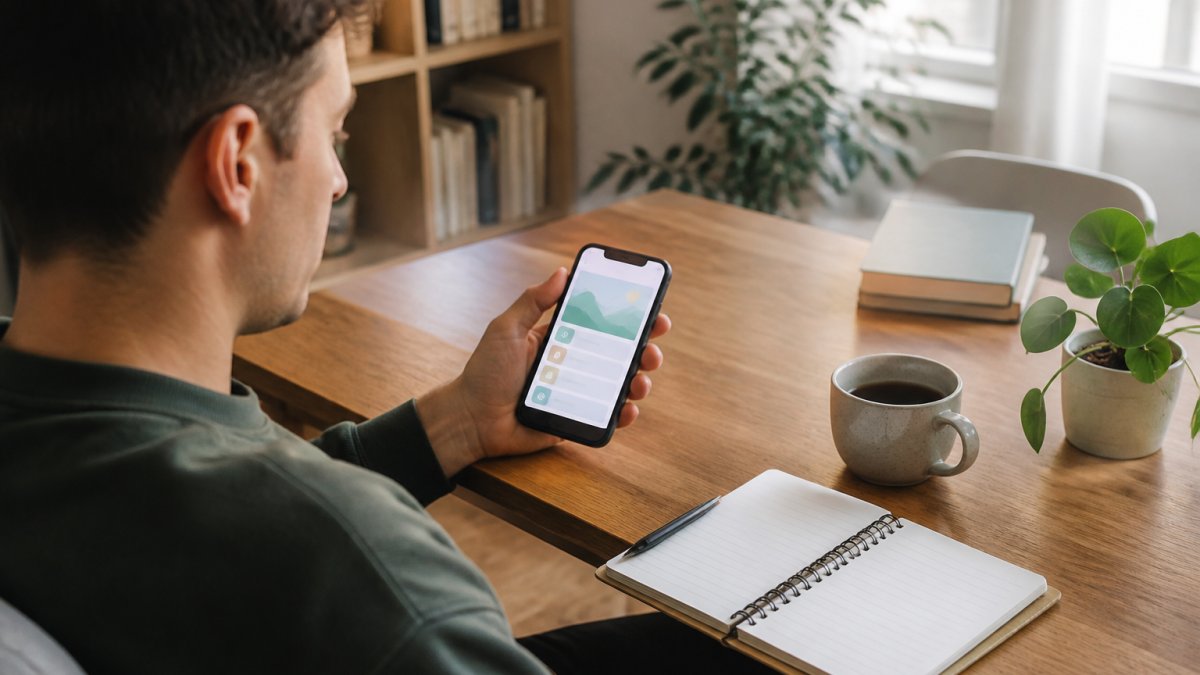
Here is the honest breakdown: no app replaces therapy, but the right digital tool gives you a repeatable system for the moments anxiety hits hardest. Below, we compare seven options across price, approach, and who each one genuinely suits.
| Tool | Price | Approach | Best For |
|---|---|---|---|
| Clarity Flow Tools | Varies by workbook | App-free guides and trackers | People who want no subscriptions |
| MindShift CBT | Free | CBT exercises | Structured thought challenging |
| FreeCBT | Free | Simple CBT journaling | Quick daily check-ins |
| Headspace | $12.99/month | Guided meditation | Beginners to mindfulness |
| Calm | $14.99/month | Meditation and sleep | Relaxation and wind-down |
| 7 Cups | Free with paid therapy | Peer support chat | Talking to someone now |
| Cues | Contact for pricing | Social skills training | Body language and cues |
Clarity Flow Tools: App-Free Workbooks for Social Anxiety
Clarity Flow Tools offers app-free workbooks. There is no app to download, and there is no monthly subscription.
Everything arrives as an instant download. You get evidence-based guides, workbooks, and trackers you can print or fill in digitally. The habit-building tools are designed to help you stay consistent without relying on motivation.
Our approach keeps the work in a notebook or a PDF, away from the phone that already competes for your attention.
The tradeoff: you will not get push reminders or in-app chat. If you need someone nudging you daily, a peer support app suits you better.
MindShift CBT and FreeCBT: Free Cognitive Behavioral Therapy Tools
MindShift CBT comes from a reputable non-profit and includes thought-challenging exercises, guided relaxation, and check-in logs that track your anxiety over time. FreeCBT strips it down further: a clean thought journal with no setup required.
Both are genuinely free, which matters if cost is your barrier. The catch is polish. MindShift's interface feels dated next to paid competitors, and FreeCBT lacks advanced features entirely.
If you want the clinical framework without spending anything, start here. If you want the same skills in a structured, printable system you own outright, Clarity Flow Tools offers workbooks that cover similar ground.
Headspace and Calm: Mindfulness and Meditation for Anxiety
Meditation apps do not treat social anxiety directly. What they do well is lower your baseline stress, so a crowded room feels less threatening before you walk in.
Headspace costs $12.99 per month and offers guided sessions, sleepcasts, and beginner mindfulness courses. Calm runs $14.99 per month with breathing exercises, sleep stories, and masterclasses. Both have limited free tiers.
Neither teaches you what to say when your mind goes blank mid-conversation.
7 Cups and Cues: Peer Support and Social Skills Training
Two apps tackle the interpersonal side. 7 Cups connects you to volunteer listeners through anonymous chat, plus community forums and optional paid therapy.
7 Cups is the better choice when you need to talk to a human right now. The free tier is generous, though its volunteer listeners are not licensed professionals.
Cues suits people who want to practice reading social cues and improve how they come across.
Neither replaces a therapist, but both fill a gap that pure CBT apps leave open.
Social Anxiety Exposure Therapy Exercises You Can Do With an App
Exposure therapy works through habituation: when you stay in a feared situation long enough for your anxiety to peak and then fall on its own, your nervous system updates its prediction that the situation is dangerous. The mechanism matters because it dictates the rules, you have to stay in the situation until the anxiety drops, not until you feel brave enough to leave.
Apps help with three parts of that loop: building the ladder, timing the exposure, and logging the result. The exposure itself still happens in the real world.
Build a fear ladder that actually climbs
A useful ladder has 10 to 15 rungs, each one only slightly harder than the last. A common mistake is jumping two rungs because the first one felt easy, that spikes dropout. Here is a sample ladder for someone whose core fear is being judged in conversation:
- Make eye contact with a cashier and say thank you
- Ask a stranger for the time
- Order a coffee with one customization
- Make small talk with a coworker for two minutes
- Ask a follow-up question in a meeting
- Attend a small gathering and introduce yourself to one person
- Share an opinion that might be disagreed with
- Give a short update to a group
Rate anxiety with a 0-100 scale
Use a Subjective Units of Distress Scale (SUDS), 0 is calm, 100 is the worst panic you can imagine. Log your SUDS before, at the peak, and 10 minutes after each attempt. The pattern you are looking for is a peak that drops by at least half while you stay in the situation. If it does not drop, the rung is too hard or you left too early.
Use apps for the parts they are good at
- MindShift CBT has a thought-challenging flow you can run before an exposure to catch the prediction ('they will think I'm boring') before it hardens.
- FreeCBT is a fast way to log the prediction and the outcome side by side, which is the evidence your brain needs.
- Headspace and Calm are useful before the exposure for a 3- to 5-minute breathing session to lower baseline arousal, not as a substitute for the exposure itself.
- A printable tracker can be used for the logging step.
The rule most people get wrong
Do not wait until you feel calm to start. The point of exposure is to act while anxious and let the calm arrive on its own. If you only practice when you already feel fine, you are rehearsing the wrong lesson.
Social Anxiety Coping Scripts for Real Conversations
Social anxiety coping scripts give you pre-planned phrases for the moments your mind empties. Prepare three or four openers, two follow-up questions, and one exit line before any event.
Try these on for size:
- "I don't think we've met. I'm [name]. How do you know [host]?"
- "That sounds interesting. What got you into it?"
- "I'm going to grab a drink. It was good talking with you."
The follow-up question is the workhorse. People remember how interested you seemed, not how clever you were.
Rehearse each line out loud three times before you go. Apps like Cues can help you practice delivery and read social cues, but a mirror and five minutes work nearly as well.
Best Practices for Managing Social Phobia With Digital Tools
Using an app as a bridge to professional care, not a replacement for it, can be beneficial.
Use the app as therapy homework, not a therapist
A licensed therapist trained in cognitive behavioral therapy will typically assign between-session work: thought records, exposure attempts, SUDS logs. An app is a good place to keep that work in one place and bring it to the next session. Three practical ways to do it:
- Ask your therapist which app or workbook they want you to use, so the format matches what they review.
- Export or screenshot your logs before each session. Patterns across two weeks are more useful than a verbal recap.
- If you are on a waitlist or between sessions, use a free CBT app to start the thought-record habit now so you are not starting from zero when therapy begins.
If cost is the barrier, community mental health centers, university training clinics, and employee assistance programs often offer sliding-scale therapy. Apps fill the gap while you wait, they do not close it.
What is actually worth paying for
Premium tiers vary widely in what they unlock. A rough way to sort them:
- Worth paying for: structured CBT courses with sequenced lessons, therapist-reviewed content, and exportable logs you can share with a clinician.
- Sometimes worth it: large meditation libraries, sleep content, and offline downloads if you commute or travel without reliable service.
- Rarely worth it: cosmetic themes, streaks, and 'unlimited' access to content you will not finish. A free tier with one good thought-record tool beats a paid tier with 500 unopened sessions.
A common pattern is paying for two or three apps at once and using none of them daily. Pick one paid tool at most, cancel the rest, and put the savings toward a session with a licensed professional.
Watch for these mistakes
- Downloading apps but never opening them past day three
- Chasing new tools instead of finishing one
- Using meditation to avoid the harder cognitive work
- Treating any app as a substitute for professional help
- Ignoring privacy settings, health apps can collect sensitive data, so check what the app shares and with whom before you log anything you would not want exposed
When to step up to professional care
If symptoms interfere with work, school, or relationships, or if you are avoiding situations that matter to you, talk to a licensed professional. Digital tools work best alongside therapy, not instead of it. For a clinical overview of anxiety treatment, see the National Institute of Mental Health anxiety resources, and for grounding techniques, the CDC mental health resources offer practical starting points.
Frequently Asked Questions
Are there free apps that actually help with social anxiety?
Yes. MindShift CBT and FreeCBT are completely free and use cognitive behavioral therapy to help you challenge anxious thoughts. MindShift offers guided relaxation, goal-setting, and check-in logs. FreeCBT provides structured thought-tracking journals. Both are evidence-based and developed by reputable organizations. If you prefer no app at all, Clarity Flow Tools offers downloadable workbooks and trackers with no subscription required.
How do digital tools complement traditional therapy for anxiety?
Digital tools work best as a supplement to professional therapy, not a replacement. They help you practice coping scripts, track symptoms, and complete exposure therapy exercises between sessions. A therapist can review your symptom tracking data and adjust your treatment plan, making your sessions more focused and effective.
What is the 333 rule for social anxiety?
The 333 rule is a grounding technique: name three things you can see, three sounds you can hear, and three body parts you can move. This pulls your attention away from anxious thoughts and back to the present moment. You can use it before or during a social interaction. Many apps, including Headspace and Calm, include similar grounding exercises in their guided meditations.
How to ease social anxiety in social situations?
Prepare coping scripts in advance, use grounding techniques like the 333 rule, and set small, realistic goals for each interaction. Apps like Cues offer social cue decoding and body language training. Exposure therapy exercises, such as starting a brief conversation with a cashier, help you build tolerance gradually. Track your progress in a journal or app to see patterns and celebrate small wins.
What are the common triggers of social anxiety disorder?
Common triggers include meeting new people, public speaking, eating in front of others, and being the center of attention. Physical symptoms like blushing, sweating, or a racing heart can worsen the anxiety. Apps with symptom tracking features, such as MindShift CBT, help you log triggers and physical responses so you can identify patterns and prepare coping strategies for high-anxiety situations.
Social anxiety does not shrink because you downloaded an app. It shrinks because you practice, log, and repeat. Clarity Flow Tools gives you the app-free structure to do exactly that: instant-download workbooks, simple trackers, and evidence-based guides that build habits without relying on motivation. Get started with Clarity Flow Tools and turn scattered effort into steady progress.