
Table of Contents
- Why Analog Habit Building Works Better Than You Think
- Understanding the Habit Loop and Behavioral Psychology
- How Long Does It Take to Form a New Habit
- Habit Stacking Examples and How to Anchor New Behaviors
- Building Habits Without Willpower: Environment and Friction
- Analog Habit Tracker Templates and Low-Tech Tracking Methods
- The Post-Tracking Phase: Maintaining Habits Long-Term
- Common Mistakes to Avoid When Building Habits Without Apps
Last Updated: August 28, 2026
Why Analog Habit Building Works Better Than You Think
The biggest misconception about habit formation is that you need technology to track progress. In reality, the most successful people often abandon apps entirely and return to pen and paper. When you build habits without apps, you eliminate the friction that kills consistency: notification fatigue, decision paralysis, and endless customization options that lead nowhere.
Analog tracking forces simplicity. You can't overthink a checkbox. You can't get distracted by notifications. You can't spend an hour configuring settings instead of doing the actual habit. Physical interaction with your progress creates a different neural response than tapping a screen. When you mark off a day on paper, your brain registers the tactile feedback, the visual accumulation of marks, and the sense of ownership, a commitment mechanism that apps cannot replicate.
Understanding the Habit Loop and Behavioral Psychology
Every habit follows the same fundamental structure: a cue triggers a routine, which delivers a reward. Understanding this loop is essential if you want to build habits without apps, because you'll need to design each component intentionally.
The cue is the trigger that initiates the behavior, a time of day, location, emotion, or another habit. The routine is the behavior itself. The reward is what your brain receives after completing the routine, reinforcing the loop.
When you rely on apps, the cue often becomes "notification from the app" rather than something intrinsic to your environment. Apps create artificial cues that disappear when you stop using the tool. Analog systems force you to design cues that exist in your physical space: a water bottle on your desk, a journal next to your bed, a sticky note on your bathroom mirror.
Digital apps offer abstract rewards like streaks and badges, but these aren't tied to the actual benefit of the habit. When you build habits without apps, you must connect the routine directly to the genuine reward, feeling more energized after exercise, sleeping better after journaling, or experiencing less anxiety after your morning routine. This real-world reward is far more durable than any gamification mechanic.
How Long Does It Take to Form a New Habit
The common claim that habits form in 21 days is a myth. Simple habits like drinking water at a specific time can stabilize in 18-21 days with perfect consistency (peer-reviewed research). More complex habits like exercising regularly typically require 60-90 days of consistent repetition before they feel automatic (peer-reviewed research). Some truly ingrained habits may take 6 months or longer.
The key variable is consistency, not duration. Missing even a few days resets progress significantly. This is why people who build habits without apps often succeed: the friction is so low that consistency becomes easier.
Set realistic expectations: a 66-day commitment aligns with research on habit stabilization for moderate-complexity behaviors. For the first 30-45 days, every repetition requires conscious effort (peer-reviewed research). This is normal. Your brain hasn't yet automated the behavior. Tracking progress during this critical phase provides the motivation to push through until the habit becomes genuinely automatic.
Habit Stacking Examples and How to Anchor New Behaviors
Habit stacking is one of the most effective techniques for building habits without apps. The method is simple: attach a new habit to an existing one using the formula "After [CURRENT HABIT], I will [NEW HABIT]."
The power lies in reducing friction. You're not creating a new trigger from scratch; you're piggybacking on a behavior you already perform consistently.
Practical examples of habit stacking:
- After I pour my morning coffee, I will drink a glass of water
- After I sit down at my desk, I will write three sentences in my journal
- After I brush my teeth, I will do five minutes of stretching
- After I close my laptop, I will review my daily wins on paper
- After I eat lunch, I will take a 10-minute walk
Select anchor habits that truly happen every single day without fail. Don't stack a new habit onto something you only do occasionally. When you build habits without apps, track habit stacks with a simple two-column system: one column lists the anchor habit, the other tracks whether you completed the stacked habit.
Building Habits Without Willpower: Environment and Friction
Willpower is overrated. The people who seem most disciplined aren't fighting themselves constantly; they've designed their environment to make the desired behavior the easiest option.
Every barrier between you and the habit makes it less likely you'll perform it. When you build habits without apps, you have complete control over your physical environment. Consider the difference: your journal is in a drawer somewhere versus your journal sits on your nightstand, open to today's page. The second scenario removes every friction point.
The same principle applies to habits you want to avoid. If you're trying to reduce snacking, remove junk food from your home. If you want to spend less time on your phone, put it in another room. You're not fighting yourself; you're making the undesired behavior inconvenient.

Environmental design includes visual cues. A habit tracker on your wall serves as a constant reminder. A water bottle on your desk reminds you to hydrate. A yoga mat rolled out by your bed reminds you to stretch. These visual cues work because they're passive and always present, never intrusive.
Analog Habit Tracker Templates and Low-Tech Tracking Methods
The beauty of tracking habits on paper is flexibility. You can create a system that matches your exact needs.
The Simple Check-Off System
The most straightforward approach is a grid where each row represents a day and each column represents a habit. Check off the box if you completed the habit that day. Draw a table with dates down the left column and habit names across the top. At the end of the week, you can see your consistency at a glance. This visual representation of streaks is surprisingly motivating.
The Habit Chain Method
The habit chain method uses a single habit per tracker. Mark each day you complete the habit, creating a visible chain of consecutive days. Seeing 30 days marked in a row creates psychological momentum. When you miss a day, the chain breaks, but you start a new one immediately. The goal isn't perfection; it's consistency.
Neurodivergent-Friendly Tracking Options
Traditional tracking systems can feel rigid for people with ADHD, autism, or other neurodivergent conditions. Instead of a strict checkbox, use a scale: "Did I do the habit?" with options like "Yes / Partially / Not Today / Not Applicable." This removes the pressure of binary success-or-failure tracking.
Color-coding is another approach. Different colors represent different levels of completion or emotional states during the habit. Flexible scheduling is also critical, allow for "Most days" or "3 times per week" instead of "Every day." A system that acknowledges variability and still tracks progress is far more sustainable.
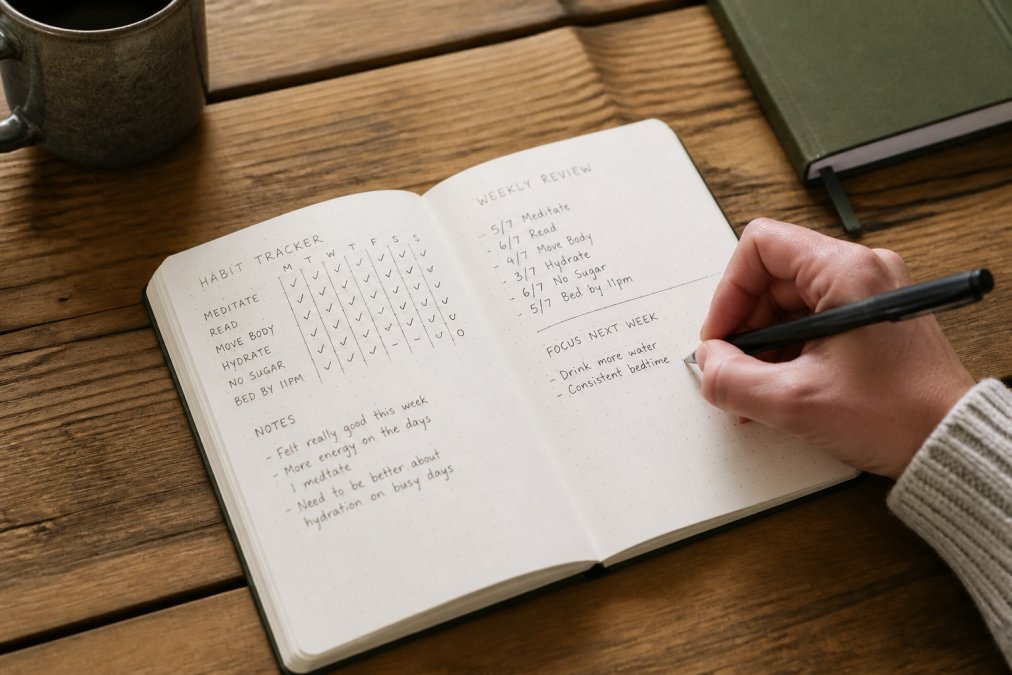
The key is removing judgment. You're not trying to be "perfect." You're trying to be consistent within your own capacity.
The Post-Tracking Phase: Maintaining Habits Long-Term
Most guides focus on building habits but ignore what happens after the habit is formed. Once a habit feels automatic, many people stop tracking it. Then, without structure, the habit slowly decays.
One effective method is periodic check-ins rather than daily tracking. Instead of marking every single day, review your habit once per week or once per month. This maintains accountability without the overhead of daily tracking.
Another approach is transitioning to a maintenance tracker that's even simpler than your formation tracker. Use a basic calendar where you mark the days you performed the habit. This requires minimal effort but keeps the behavior visible and intentional.
The risk of the post-tracking phase is complacency. A habit that feels automatic can still decay if you stop paying attention. The solution is building in natural accountability: telling someone else about your habit, scheduling it at a specific time that's hard to skip, or designing your environment so the habit remains the path of least resistance.
Common Mistakes to Avoid When Building Habits Without Apps
Choosing the wrong anchor habit. Pick anchor habits that happen consistently every single day: waking up, brushing teeth, eating a meal, starting work.
Starting too ambitious. Don't start with "I will exercise for an hour every morning." Start with "I will put on my workout clothes every morning." Once that's automatic, add the actual exercise.
Abandoning the system after one missed day. One missed day means nothing. What matters is the next day. When you miss, mark it, acknowledge it, and move forward.
Designing a tracker that's too complicated. If your tracking system takes more than 30 seconds per day, you'll eventually stop using it. A checkbox is better than a detailed log.
Relying on motivation instead of environment. Motivation fluctuates. Environment is constant. Design your environment so the habit is the easiest choice.
Not connecting the habit to a real reward. Connect your habit to an actual benefit: feeling better, sleeping deeper, thinking more clearly, or reducing anxiety. Without this real-world reward, the habit remains a chore.
Tracking the wrong metric. Track the specific behavior: "Did I journal for 10 minutes?" not "Did I think about journaling?" Specificity matters.
The common thread is losing sight of simplicity. You chose to build habits without apps because apps add complexity. Keep it simple, keep it visible, and keep showing up.
Most people fail at habit building because they're fighting themselves instead of designing systems. When you build habits without apps, you remove the technology middleman and focus on what actually works: clear cues, consistent routines, real rewards, and an environment that makes the desired behavior the easiest choice.
Clarity Flow Tools provides evidence-based workbooks and trackers designed specifically for this approach. Our guides walk you through designing your own analog system tailored to your needs, eliminating the guesswork and giving you a structured framework that works without requiring you to manage another app. Get started with Clarity Flow Tools and build habits that actually stick.
Frequently Asked Questions
How long does it take to form a new habit?
Research shows the average is 66 days, though this varies from 18 to 254 days depending on the habit's complexity and your consistency. Simple habits like drinking water may take 2-3 weeks, while behavioral changes require longer. The key is maintaining the behavior during this window without expecting perfection. Missing one day won't reset your progress, but consistency matters more than intensity.
What are some practical habit stacking examples I can start with?
Habit stacking attaches new behaviors to existing ones. Examples: after pouring morning coffee, do 10 pushups; after brushing teeth, write three things you're grateful for; after lunch, drink a full glass of water; after closing your laptop, do a 5-minute stretch. The formula is 'After [CURRENT HABIT], I will [NEW HABIT].' Start with habits you already do automatically and stack something small onto them to reduce friction.
Can I really build habits without willpower?
Yes. Willpower is unreliable because it depletes throughout the day. Instead, design your environment and routines to make the habit automatic. Remove friction by placing your habit tracker where you'll see it, use visual cues like a water bottle on your desk, and anchor new habits to existing routines through habit stacking. When the behavior requires minimal decision-making, you bypass willpower entirely.
Why is analog tracking more effective than using an app?
Analog tracking reduces cognitive load and digital distractions. Writing by hand engages more neural pathways, making the behavior more memorable. Physical trackers stay visible on your desk or wall, serving as constant visual cues, whereas app notifications can feel pushy. For overthinkers and those with social anxiety, analog systems provide a calm, intentional experience without the anxiety of notifications or performance metrics.