
Table of Contents
- Understanding Social Anxiety and Why It Happens
- 1. Use Social Anxiety Grounding Techniques to Stay Present
- 2. Challenge Negative Thought Patterns
- 3. Start With Social Anxiety Conversation Starters
- 4. Build Daily Habits for Social Confidence
- 5. Gradually Expose Yourself to Social Situations
- 6. Reduce Stimulants and Move Your Body
- 7. Practice Mindfulness and Relaxation Exercises
Last Updated: August 22, 2026
Understanding Social Anxiety and Why It Happens
Social anxiety disorder is a mental health condition characterized by intense fear and avoidance of social situations where you might be evaluated or judged by others. It goes beyond normal shyness, it's a persistent pattern that interferes with work, school, relationships, and daily functioning. Physical symptoms are real: racing heart, sweating, trembling, and overwhelming dread.
Social anxiety feeds on itself: worry triggers physical symptoms, which intensify anxiety, and avoidance provides temporary relief but strengthens the fear cycle long-term. The good news is that social anxiety is highly treatable and responds well to behavioral strategies, lifestyle changes, and gradual exposure.
At Clarity Flow Tools, we focus on practical, evidence-based approaches you can implement today.
1. Use Social Anxiety Grounding Techniques to Stay Present
Grounding techniques interrupt the anxiety cycle by anchoring your attention to the present moment instead of feared futures. When your mind spins with "what ifs," your nervous system stays activated. Grounding pulls you back to reality, what you can actually see, hear, and feel right now.
Sensory-based grounding works fast (under two minutes) and requires no one else to know you're using it. You can ground yourself in a meeting, at a party, or while waiting to speak in class.
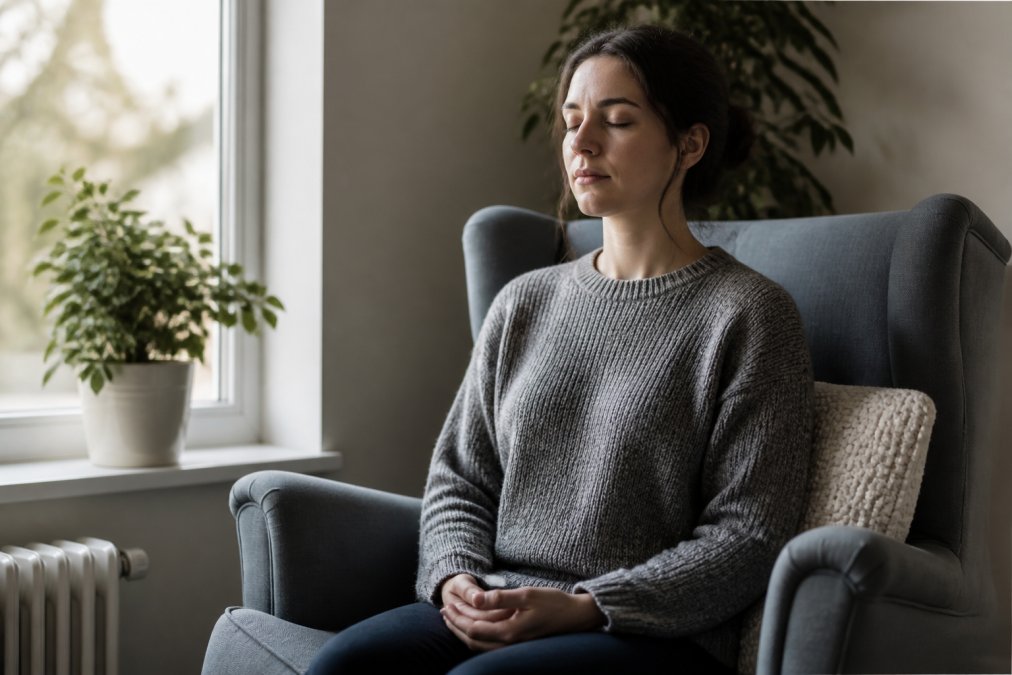
The 5-4-3-2-1 Grounding Method
Name five things you can see, four you can touch, three you can hear, two you can smell, and one you can taste. This technique works because your brain can't simultaneously catastrophize and carefully catalog sensory details.
Box Breathing for Immediate Calm
Box breathing uses a 4-4-4-4 count: inhale for four counts, hold for four, exhale for four, hold for four (peer-reviewed research). Repeat five to ten times. Within two minutes, your heart rate slows and your nervous system shifts from fight-or-flight into calm. This is why military personnel, emergency responders, and athletes use it.
2. Challenge Negative Thought Patterns
Social anxiety thrives on distorted thinking. Your mind generates predictions that feel true but aren't: "Everyone will judge me," "I'll embarrass myself," "People can see how nervous I am." These are interpretations, usually wrong.
Cognitive behavioral therapy identifies common distortions: catastrophizing (assuming the worst), mind-reading (believing you know what others think), and overgeneralization (one awkward moment means you're incompetent). Recognizing these patterns is the first step to changing them.
Challenging negative thoughts means examining the evidence. When you think "Everyone will judge me," ask: Is that actually true? Has everyone judged you in past situations, or did most people not care? When you think "I'll say something stupid," ask: What's the actual consequence? Most people forget awkward moments within hours.
Start by noticing when anxiety spikes and writing down the triggering thought. Then ask: Is this based on fact or fear? What evidence contradicts it? Over time, you'll interrupt automatic patterns before they escalate. Keep a simple record of anxious thoughts and what actually happened. The gap between your predictions and reality is where change happens.
3. Start With Social Anxiety Conversation Starters
One major source of social anxiety is not knowing what to say. Conversation starters solve this by providing a framework. The best starters are open-ended questions about the other person, people generally like talking about themselves, shifting pressure off you.
Practical conversation starters that work in most situations:
- "What brought you here today?" (at events, classes, meetings)
- "How do you know the host?" (at social gatherings)
- "What do you do?" (professional settings, with follow-up questions)
- "Have you been here before?" (at venues, restaurants, classes)
- "What are you working on these days?" (with acquaintances or colleagues)
The key is asking a question and genuinely listening instead of planning your next response. Genuine curiosity reduces anxiety because it shifts focus outward. If conversation stalls, use follow-ups: "That's interesting, what made you interested in that?" For workplace settings, prepare three to five conversation topics beforehand: current projects, industry news, recent articles, upcoming events.
4. Build Daily Habits for Social Confidence
Confidence is built through repeated small successes. Every time you push through social anxiety and the feared outcome doesn't happen, your brain updates its threat assessment. You become slightly less anxious next time.
The problem with waiting for motivation is that anxiety makes motivation hard to find. The solution is building habits, consistent behaviors that don't depend on how you feel.

Consistency Over Perfection
A small daily habit beats a perfect action you never take. You don't need to attend parties every weekend or make three new friends monthly. You need one small social action daily: sending a message, having a brief conversation, joining a group chat, speaking up once in a meeting.
Make the habit specific and achievable. "Be more social" is too vague. "Reply to one message in the group chat" or "Ask one person a question during lunch" is concrete and trackable. Track these small wins using a checklist, calendar, or tracker. Tracking creates accountability and makes progress visible, which itself reduces anxiety. Consistency matters more than intensity.
5. Gradually Expose Yourself to Social Situations
Avoidance fuels social anxiety. Every time you avoid a situation, anxiety decreases temporarily but fear strengthens. Gradual exposure breaks this cycle.
Gradual exposure means creating a hierarchy of social situations from least to most anxiety-provoking, then working through them in order. Build your hierarchy by listing situations that trigger anxiety. Be specific: "Speaking in a large meeting" differs from "Speaking in a small team meeting." Rate each on a 1-10 anxiety scale, then organize from lowest to highest.
Example:
- Sending a text to someone new (3/10)
- Joining a group conversation where you don't know everyone (5/10)
- Speaking up in a team meeting (6/10)
- Attending a social event where you don't know many people (7/10)
- Making a phone call to someone you don't know well (8/10)
- Giving a presentation to a large group (9/10)
Start with 3/10 situations and repeat until manageable. Then move to 4-5/10. The goal isn't complete comfort, it's doing the thing even though you're anxious and noticing the feared outcome doesn't happen. Each exposure teaches your nervous system: you can handle this.
6. Reduce Stimulants and Move Your Body
Your physical state directly affects anxiety. Caffeine, energy drinks, and high sugar amplify anxiety symptoms by activating the same nervous system response as stress. Consider reducing or eliminating caffeine, especially before social situations.
Exercise is one of the most underutilized anxiety management tools. Aerobic exercise, walking, running, cycling, swimming, dancing, directly reduces anxiety by burning stress hormones and activating the parasympathetic nervous system (the NIH). A 20-30 minute walk before a social situation measurably reduces anxiety.
You don't need intense workouts. Daily walks, gentle yoga, or dancing counts. Consistency matters more than intensity. People who move regularly have lower baseline anxiety and better emotional regulation. Movement also improves sleep, crucial because sleep deprivation amplifies anxiety.
7. Practice Mindfulness and Relaxation Exercises
Mindfulness is observing your thoughts and feelings without judgment. It's not about clearing your mind or becoming calm, it's about noticing anxiety without letting it control you. When you practice mindfulness, you realize anxious thoughts are just thoughts, not predictions of the future.
A simple practice: sit quietly for five to ten minutes and notice thoughts as they arise. Don't try to change them. Just observe: "I'm having the thought that people will judge me." That's different from "People will judge me." The thought is an event in your mind, not a fact.
Progressive muscle relaxation activates the parasympathetic nervous system (the NIH). Tense and release muscle groups: toes, feet, calves, thighs, abdomen, chest, arms, shoulders, neck, and face. This takes 10-15 minutes and creates deep physical relaxation. The most effective practice is whichever one you'll actually do.
Quick Reference: Simple Ways to Reduce Social Anxiety
| Strategy | When to Use | Time Required | Best For |
|---|---|---|---|
| 5-4-3-2-1 Grounding | During social situations when anxiety rises | 2-3 minutes | Immediate anxiety relief |
| Box Breathing | Before entering social situations or during panic | 2-5 minutes | Physical anxiety symptoms |
| Thought Challenging | When anxious thoughts trigger avoidance | 5-10 minutes | Breaking thought patterns |
| Conversation Starters | At social events, meetings, or group settings | Ongoing | Reducing fear of talking |
| Daily Social Habit | Every day, consistent timing | 5-15 minutes | Building long-term confidence |
| Gradual Exposure | Working through your anxiety hierarchy | Varies | Reducing avoidance patterns |
| Caffeine Reduction | Daily, especially before social situations | Ongoing | Reducing physical symptoms |
| Movement/Exercise | Daily or most days | 20-30 minutes | Baseline anxiety reduction |
| Mindfulness Practice | Daily, preferably same time | 5-15 minutes | Emotional regulation |
Getting Started: Your First Steps
You don't need to implement everything at once. Choose one or two strategies and practice them for a week. Notice what happens. Does the 5-4-3-2-1 method help you stay present? Does reducing caffeine decrease baseline anxiety? Does one daily social interaction build momentum?
Research on social anxiety is clear: small, consistent actions create real change. You're not trying to eliminate anxiety, that's unrealistic. You're building skills and experiences that gradually reduce anxiety's grip on your life.
This guide covers evidence-based strategies, but real work happens when you apply them. Consider using a habit tracker or workbook to maintain consistency. Clarity Flow Tools offers digital systems specifically designed for building social confidence without relying on motivation.
Social anxiety is treatable. You can navigate social situations with greater ease. Start small. Pick one strategy. Use it consistently. Notice the change. Then add another. That's how sustainable progress happens.
Frequently Asked Questions
What are the most effective ways to reduce social anxiety?
The most effective approaches combine grounding techniques, gradual exposure to social situations, and challenging negative thought patterns. Grounding techniques like the 5-4-3-2-1 method help you stay present during anxious moments. Exposure therapy, facing feared social situations gradually, trains your brain that these situations are manageable. Cognitive behavioral therapy techniques help you reframe anxious thoughts. Daily habits like aerobic exercise, mindfulness practice, and limiting caffeine also significantly reduce anxiety symptoms. Combining multiple strategies works better than relying on one approach alone.
Can social anxiety be managed without professional therapy?
Yes, many people successfully manage social anxiety through self-help strategies, especially when they're consistent and evidence-based. Grounding techniques, exposure therapy, mindfulness, lifestyle changes, and challenging negative thoughts are all manageable on your own. However, the severity of your social anxiety matters. Mild to moderate anxiety responds well to self-directed approaches, while severe social phobia or clinical diagnosis may benefit from professional treatment like cognitive behavioral therapy or medication. Starting with self-help strategies is reasonable, but consider professional support if your anxiety significantly interferes with work, school, or relationships.
What are some quick grounding techniques for social anxiety?
Quick grounding techniques you can use anywhere include the 5-4-3-2-1 method (name 5 things you see, 4 you can touch, 3 you hear, 2 you smell, 1 you taste), box breathing (inhale for 4 counts, hold for 4, exhale for 4, hold for 4), and physical grounding like pressing your feet firmly into the ground. These techniques work by redirecting your attention from anxious thoughts to your immediate physical surroundings, interrupting the anxiety cycle. Most take under two minutes and can be done discreetly in any social situation, from meetings to parties to casual conversations.
How can I build confidence in social situations as an introvert?
Building social confidence as an introvert starts with accepting your personality type rather than fighting it. Prepare conversation starters beforehand so you have a framework for interaction. Practice gradual exposure, attend smaller gatherings before large events, speak up once in a meeting before aiming for multiple contributions. Build daily habits like brief social interactions (chatting with a barista) that accumulate into larger confidence. Use your introvert strengths: listening skills, thoughtfulness, and depth. Aerobic exercise and mindfulness reduce baseline anxiety, making social situations feel less overwhelming. Remember that confidence builds through repeated exposure and small wins, not overnight transformation.