
Table of Contents
- The Habit App Problem: Why Streaks and Gamification Fall Short
- Understanding Habit Formation Frameworks Beyond Apps
- Habit Tracking App Fatigue: The Hidden Cost of Notifications
- Behavior Change Intervention Design: Why Structure Beats Gamification
- Digital Guides vs. Habit Apps: A Direct Comparison
- How to Transition From Apps to Self-Managed Systems
- Conclusion
Last Updated: August 12, 2026
The Habit App Problem: Why Streaks and Gamification Fall Short
Habit apps promise transformation through notifications, streaks, and colorful progress bars. Yet most users abandon them within weeks. The problem isn't willpower, apps were designed to maximize engagement, not behavior change.

Gamification creates a false sense of progress. A 30-day streak measures consistency, not meaningful change. You can meditate for 100 consecutive days and still struggle with racing thoughts when it matters most. The streak becomes the goal instead of the actual behavior change you're trying to achieve.
Notifications trigger cognitive load. Every ping demands attention, creating decision fatigue as you constantly decide whether to engage, dismiss, or snooze. This mental friction accumulates throughout the day, leaving you drained before you even attempt the habit itself.
Most habit apps solve the wrong problem. They assume people fail because they forget or lose motivation. The actual barriers are deeper: unclear triggers, misaligned goals, and lack of real accountability. A notification can't fix any of these.
Understanding Habit Formation Frameworks Beyond Apps
Behavior change intervention design has evolved significantly from the simple "habit loop" most people know. Habit formation requires three elements that apps rarely address: environmental design, psychological understanding, and structured reflection.
Environmental design means arranging your physical and digital world to make the desired behavior easier. Apps can't do this, they exist in your phone, competing with dozens of other apps. A digital guide that teaches you to redesign your morning routine or workspace creates lasting change.
Psychological understanding goes deeper than motivation. It involves recognizing your personal triggers and building intrinsic motivation instead of relying on external rewards. Gamification (points, badges, streaks) is extrinsic motivation that works briefly, then your brain adapts. Digital guides that teach you why you avoid certain behaviors build intrinsic motivation, that's sustainable. Research indicates that goals driven by intrinsic motivation are more enduring than those motivated by external rewards.
Structured reflection is where most people fail silently. You track your habit, see a streak break, and feel discouraged. But you never ask: What happened? What would have helped? A well-designed digital guide includes reflection prompts that help you learn from setbacks instead of just recording them.
Research on behavior change intervention design shows the most effective approaches combine education, environmental modification, and accountability, not gamification.
Habit Tracking App Fatigue: The Hidden Cost of Notifications
Digital fatigue is real. The average user with three habit apps receives 15-30 notifications daily from tracking reminders alone. Each notification is a decision point, and the cognitive cost accumulates.
Notifications create "notification anxiety." You anticipate pings, check your phone preemptively, and feel guilty when you see missed reminders. None of this drives behavior change; it creates stress around the habit itself.
The psychological dependency on streaks compounds this problem. A 45-day streak feels like progress, but research on habit formation shows consistency matters less than understanding your patterns and adjusting. A 45-day streak of half-hearted meditation is less valuable than three weeks of intentional practice followed by reflection and recalibration.
Minimalist design reduces cognitive load dramatically. Clarity Flow Tools addresses this by offering guides and trackers that work offline, without notifications. You engage when you're ready, not when your phone demands it. The absence of notifications isn't a limitation; it's a feature.
Behavior Change Intervention Design: Why Structure Beats Gamification
Effective behavior change follows a specific pattern: education → environmental setup → structured practice → reflection → adjustment. Apps compress this into "log your habit daily."
Education teaches you what to do and why it matters. A digital guide walks you through the science, why morning routines affect anxiety, how breathing patterns influence overthinking. This knowledge creates intrinsic motivation.
Environmental setup is where behavior change actually happens. A digital guide teaches specific tactics: how to arrange your workspace, design your morning routine, and set up accountability with real people. Apps can't do this.
Structured practice with built-in reflection separates lasting change from temporary compliance. You practice, then reflect: What went well? What was harder? What would help next time? This reflection loop is where learning happens.
Accountability without streaks works differently. Real accountability comes from people, not algorithms. A digital guide that teaches you how to set up accountability with a friend, coach, or community creates genuine motivation.
Digital Guides vs. Habit Apps: A Direct Comparison
The choice between digital guides and habit apps is about what actually drives behavior change.
| Dimension | Digital Guides | Habit Apps |
|---|---|---|
| Primary Focus | Understanding behavior and building intrinsic motivation | Tracking consistency and maintaining streaks |
| Cognitive Load | Low (no notifications, offline-friendly) | High (notifications, reminders, social features) |
| Scalability | Teaches principles applicable to any habit | Limited to habits the app was designed for |
| Accountability | Builds real relationships and external support | Algorithmic streak tracking |
| Reflection | Structured, intentional, regular | Minimal or absent |
| Long-term Retention | High (users understand why they're doing it) | Low (users abandon when streaks break) |
| Cost of Failure | Learning opportunity | Psychological setback |
After the first month, app users see declining engagement. Guide users see deepening understanding. One group is checking boxes. The other is building lasting change.
Clarity Flow Tools emphasizes this distinction directly. The guides, workbooks, and trackers are designed for offline use, without notifications or streaks. You engage when you're ready and build habits because you understand how they help you.
Accountability Without Streaks
Real accountability requires real people. A streak is a solo metric that doesn't involve anyone else. Effective accountability structures involve telling someone what you're doing and why, then reporting back regularly.
Digital guides teach you how to set up this kind of accountability. They walk you through specific conversations to have and frameworks for regular check-ins. Apps can't do this. When you're accountable to a person, they understand context. An app streak doesn't.
Offline Accessibility and Minimalism
The best tool is the one you actually use. For many people, that means something that doesn't require a phone, doesn't send notifications, and doesn't compete with other apps for attention.
Offline accessibility matters more than most realize. You can use a physical workbook anywhere, no wifi required. You can review your progress without opening an app that will immediately show you seventeen other things demanding attention.
Minimalist design reduces decision fatigue. A simple workbook with clear prompts is easier to use than an app with dozens of customization options. Fewer choices mean less friction, and less friction means higher completion rates.
Clarity Flow Tools' approach to instant downloads and app-free access directly addresses this. You get the guide, you use it, you progress. Pricing depends on quantity, dates, and delivery. Please visit the Clarity Flow Tools website for current prices. No subscription, no notifications, no platform lock-in.
How to Transition From Apps to Self-Managed Systems
If you're currently using habit apps and want to move to a guide-based approach, the transition is straightforward.
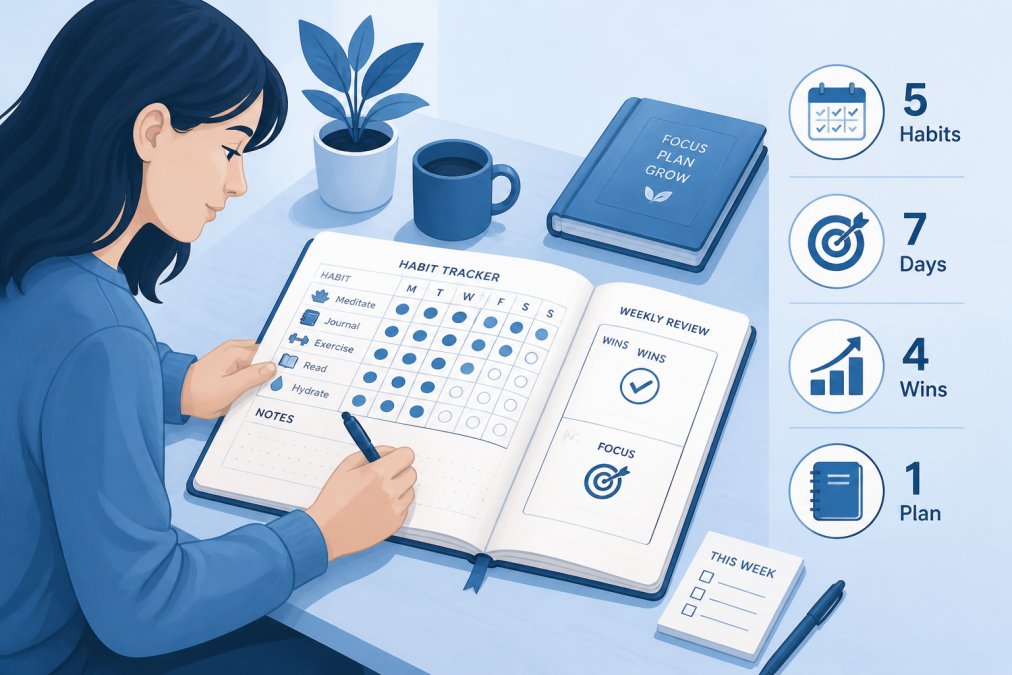
Step 1: Export your data and identify patterns. Look at what you actually completed consistently. Focus on habits where you saw real change in how you felt or performed.
Step 2: Choose your tracking method. Pick something that requires minimal friction, a physical journal, spreadsheet, or printed tracker. Spend less than two minutes per day on tracking.
Step 3: Build reflection into your system. Once weekly, spend 15 minutes reviewing your week. What went well? What was harder? What would help next week?
Step 4: Set up real accountability. Tell one person what you're doing and schedule a weekly check-in. This is more powerful than any app feature.
Step 5: Use a digital guide to understand the behavior. If you're building a habit around managing anxiety or building confidence, get a guide that teaches you the psychology behind it.
The transition typically takes two to three weeks. By week four, most people report feeling less pressure and more clarity about their progress.
The evidence is clear: why digital guides beat habit apps comes down to what actually drives behavior change. Apps optimize for engagement. Guides optimize for understanding. The habits that stick aren't the ones you track obsessively, they're the ones you understand deeply.
Clarity Flow Tools' collection of guides, workbooks, and trackers is built on this principle. No notifications. No streaks. No false accountability. Just clear, evidence-based frameworks for reducing anxiety, building confidence, and creating habits that actually last.
American Psychological Association research on behavior change shows that sustainable habit formation requires education and environmental design, not gamification. Stanford Behavior Design Lab findings on digital fatigue confirms that notification-heavy systems reduce long-term engagement. Journal of Applied Psychology studies on intrinsic motivation demonstrate that understanding why you're doing something matters more than external rewards.
If you're tired of apps that promise transformation and deliver frustration, start with Clarity Flow Tools. Get instant access to guides and workbooks designed for people who think deeply, value their attention, and want real change, not just a streak.
Frequently Asked Questions
What is the difference between a habit app and a digital guide?
Habit apps like Streaks and Habitica rely on notifications, streaks, and gamification to drive behavior. Digital guides provide structured frameworks, worksheets, and evidence-based strategies you work through at your own pace. Apps push you through notifications; guides teach you why habits stick. For introverts and overthinkers, digital guides reduce cognitive load and eliminate the anxiety of broken streaks or constant notifications interrupting focus.
Why do habit tracking apps often fail to create long-term change?
Most habit apps prioritize engagement metrics over behavior change. They use streaks and rewards to keep you opening the app, but this extrinsic motivation fades once the novelty wears off. Research shows intrinsic motivation, understanding *why* you're building a habit, creates lasting change. Digital guides teach behavior change intervention design principles that apps skip entirely, helping you build habits rooted in genuine goals, not gamified points.
Are digital guides more effective for behavior change than apps?
Yes, for most people seeking sustainable change. Digital guides teach habit formation frameworks that address the psychology behind behavior, identifying triggers, understanding resistance, and building systems that work without constant motivation. Apps work well for short-term engagement but often create dependency on notifications and streaks. Studies on digital fatigue show users who rely on app notifications experience higher burnout and lower completion rates over 6+ months compared to those using structured, app-free guides.
Do I need to download an app to use a digital guide for habit building?
No. Digital guides like those from Clarity Flow Tools are instant downloads, PDFs, workbooks, or web-based resources you access directly without installing apps. This eliminates notification fatigue, reduces cognitive load, and works offline. You can print sections, reference them on any device, and avoid the overwhelming feeling of another app draining your phone's battery and attention.