
Table of Contents
- Consistency vs Intensity in Habit Formation: A Quick Comparison
- How to Build Consistent Daily Habits That Last
- Habit Formation Duration: What the Research Actually Says
- Small Habit Examples for Beginners: Start Smaller Than You Think
- Evidence-Based Habit Tracking: Tools and Methods That Work
- The Intensity Threshold: When Going Harder Actually Helps
- Conclusion: Building a System That Balances Both
- Frequently Asked Questions
Last Updated: September 10, 2026
Consistency vs Intensity in Habit Formation: A Quick Comparison
Consistency vs intensity in habit formation is the choice between showing up regularly at a manageable level and pushing hard in short, aggressive bursts. The research favors consistency for long-term results, with intensity reserved for breaking through plateaus once a routine is stable. This guide from Clarity Flow Tools breaks down when each approach works, how long habits actually take to form, and how to build a system that uses both.
The distinction matters because most people quit not from lack of effort but from misapplied effort. They start with maximum intensity, burn out within weeks, and conclude they lack discipline. Behavioral psychology suggests the opposite problem: the plan was unsustainable from day one.
Below, we'll show you exactly how to structure habits around frequency first, then layer in intensity where it counts. The framework we cover works for fitness, writing, studying, and any behavior you want to make automatic.

Quick Comparison Table
| Factor | Consistency | Intensity |
|---|---|---|
| Primary goal | Long-term sustainability | Short-term performance gains |
| Frequency | Daily or near-daily | 2-4 sessions per week |
| Best for | Beginners, habit formation | Experienced practitioners, plateaus |
| Burnout risk | Low | High without recovery |
| Time to results | Gradual, compounding | Fast, then plateaus |
| Key metric | Adherence rate | Training volume or output |
How to Build Consistent Daily Habits That Last
Building consistent daily habits starts with making the behavior so small it feels almost trivial, then repeating it at the same cue every day. A common mistake is setting the bar at what you can do on your best day rather than your worst. The habit loop (cue, routine, reward) depends on repetition, not effort.
Practical steps that hold up:
- Anchor the new habit to an existing one (after coffee, before shower).
- Define a minimum version you can do in under two minutes.
- Track completion, not quality, for the first month.
- Design your environment so the cue is visible and the friction is low.
- Miss once, never twice.
What most guides miss is that motivation is a lagging indicator. You don't feel like doing the habit until after you've done it enough times for the behavior to feel automatic. Waiting for motivation inverts the sequence.
Habit Formation Duration: What the Research Actually Says
Habit formation duration varies widely by person and behavior, and the popular "21 days" figure has no strong scientific backing. A widely cited study from University College London found that automaticity took anywhere from 18 to 254 days depending on the complexity of the behavior, with a median around 66 days (peer-reviewed research). That range, not a single number, is what you should plan around.
The 66-day habit formation myth is really a rounding error. It's a median, not a deadline. Simple habits like drinking a glass of water after waking can feel automatic in a few weeks. Complex routines like a full workout or a daily writing practice take longer because they involve more steps and more decisions.
For planning purposes, assume three months for a new behavior to feel low-effort. Track how automatic it feels on a 1-10 scale weekly rather than counting days. When the score stabilizes above 7 without conscious effort, the habit has taken hold.
Small Habit Examples for Beginners: Start Smaller Than You Think
Small habit examples for beginners should be almost embarrassingly easy. The goal in the first month is not progress, it's proof that you can show up. Here are starting points that work for most people:
- Reading: one page before bed
- Exercise: five push-ups after brushing teeth
- Meditation: two minutes of breathing after waking
- Writing: one sentence in a journal each morning
- Walking: a five-minute loop around the block after lunch
- Hydration: one glass of water with every meal
The pattern is the same: attach the behavior to a cue you already do daily, keep the duration short enough that you can't reasonably skip it, and let frequency do the work. Once the behavior is automatic, you can extend duration or add intensity without losing the habit.
Evidence-Based Habit Tracking: Tools and Methods That Work
Evidence-based habit tracking works because measurement itself changes behavior. When you know a behavior will be recorded, you attend to it differently, a phenomenon researchers call the observer effect, and one that behavioral economists have documented in everything from weight-loss studies to workplace safety logs (PubMed). The mechanism is simple: tracking converts an invisible, forgettable action into a visible data point, and the brain treats that data point as a small reward. Over time, the act of logging becomes its own cue.
But not all tracking is equal. The methods that hold up share three properties: they are low-friction, visible, and focused on frequency rather than performance. A tracker you have to open, unlock, navigate, and sync has already lost. A tracker that sits on your counter or your home screen and asks one question, did you do it or not, wins.
What the Research Actually Supports
Three findings from behavioral science are worth knowing before you pick a method:
- Frequency tracking beats quality tracking early on. In the first month, the goal is repetition, not optimization. Rating your workout 1-10 adds a decision layer that competes with the behavior itself.
- Visible progress reinforces adherence. A paper calendar with X's, a wall chart, or a streak counter all work because the visual record becomes a cue and a reward at once.
- Tracking too many behaviors at once degrades all of them. Cognitive load is the enemy of adherence. Cap it at three.
Methods Compared
| Method | Best For | Friction Level | Cost |
|---|---|---|---|
| Paper tracker | Visual thinkers, app-averse users | Low | Free |
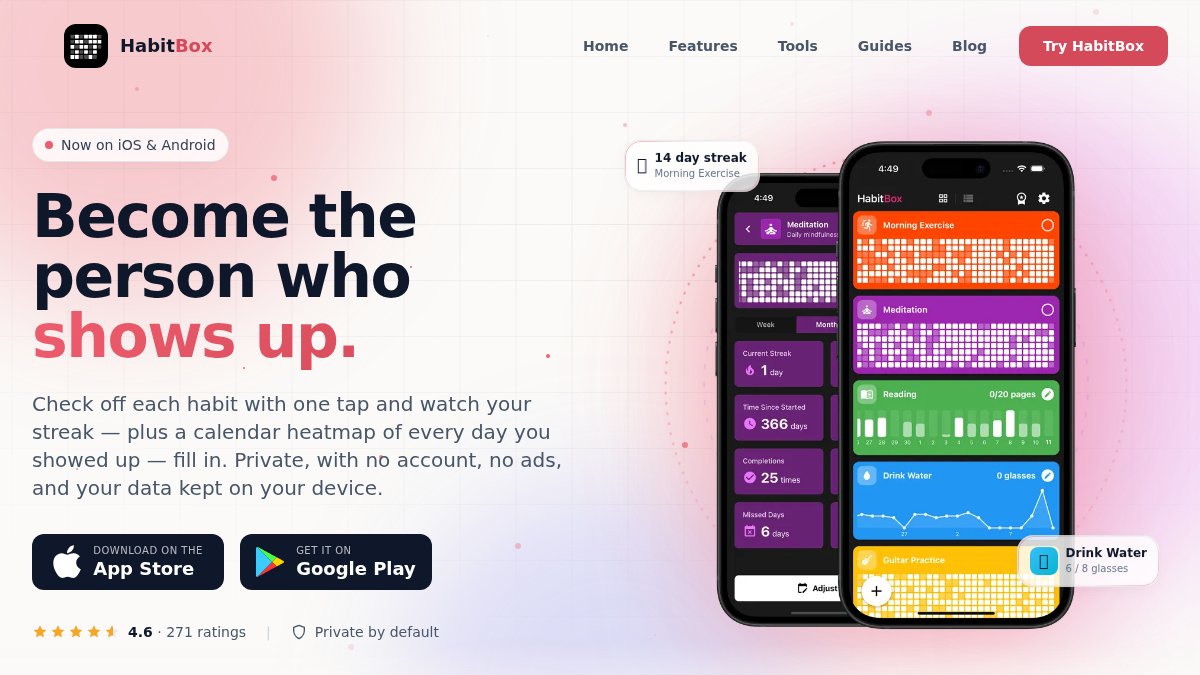
| HabitBox | People prone to all-or-nothing thinking | Low | $4.99/month |
| Streaks | Apple users wanting simplicity | Low | $4.99 one-time |
| Odin Fitness | Structured workout habit building | Medium | $19.99/month |
| Atomic Habits Workbook | Workbook-style planners | Medium | $15.00 one-time |
For readers who want an app-free, evidence-based system, Clarity Flow Tools offers downloadable workbooks and trackers designed for introverts and overthinkers who need structure without another notification stream. The format is intentionally simple: print or fill digitally, track daily, review weekly.
The Weekly Review Is the Part Most People Skip
Daily tracking tells you whether you showed up. A weekly review tells you why. Set aside ten minutes once a week to look at the pattern: which days did you miss, and what was different about them? Most people find the misses cluster around the same cue, a late meeting, a disrupted morning, a travel day. That cluster is the real problem to solve, not willpower.
The review also protects against a subtle trap: tracking for its own sake. If the tracker becomes the goal, you can hit every checkbox and still not build the habit. The review forces you to ask whether the behavior is getting easier, more automatic, and less dependent on the tracker itself.
The Intensity Threshold: When Going Harder Actually Helps
The intensity threshold is the point at which your current training or practice load no longer produces adaptation, and adding controlled intensity is the only way forward. For beginners, that threshold is months away. For intermediate practitioners stuck on a plateau, it's the missing variable. Most articles on consistency vs intensity stop at "consistency is king" and never explain this, which is why so many consistent people eventually stall and quit.
Why Plateaus Happen: The Neurobiology of Habit Friction
To understand the threshold, you have to understand why the brain resists consistency in the first place. Habit formation runs on a loop: cue, routine, reward. Each repetition strengthens the synaptic connection between the cue and the routine, and the brain shifts the behavior from the deliberate, effortful system (associated with the prefrontal cortex) to the automatic, low-effort system (associated with the basal ganglia). That shift is what makes a habit feel effortless, and it's also what creates the plateau.
Once a behavior is automatic, the brain stops paying attention to it. It has optimized for efficiency, not improvement. The same 20-minute run that once felt hard now feels easy, not because you got stronger, but because your brain stopped recruiting the effortful system. This is habit friction: the brain's resistance to re-engaging the deliberate system once a behavior has been automated. Consistency got you here. Consistency alone will not take you further.
The Three Conditions for Adding Intensity
Intensity is not a lifestyle. It's a tool you deploy when three conditions are true:
- You've maintained consistent frequency for at least 8-12 weeks. The habit must be automatic before you stress it. Adding intensity to a fragile habit breaks the habit, not the plateau.
- Your performance metrics have flatlined despite steady adherence. If you're still improving on consistency alone, you don't need intensity yet. Patience is the correct move.
- Recovery is good, sleep is stable, and you're not carrying accumulated fatigue. Intensity is a stressor. It only produces adaptation when the body has the resources to recover from it.
When those three are true, introduce intensity in a structured block, typically 2-4 weeks, then return to baseline consistency. This is the recovery-based consistency model: intensity is a phase, not a permanent state.
The Recovery-Based Consistency Model
Most habit advice treats rest as an interruption to consistency. The recovery-based model treats rest as a component of it. The logic is straightforward: adaptation happens during recovery, not during the stressor. A hard training block without a deload is not intensity, it's just accumulated fatigue, and it ends in burnout or injury, both of which break the habit entirely.
In practice, the model looks like this:
- Weeks 1-8+: Consistency only. Same frequency, same load, no added intensity. The goal is automaticity.
- Weeks 9-12: Intensity block. Add one variable, weight, pace, duration, or complexity, not all four. Keep frequency steady.
- Week 13: Deload. Return to baseline load or below. This is not a break; it's the phase where adaptation consolidates.
- Repeat. Each cycle, the baseline rises slightly. Consistency carries the habit; intensity raises the ceiling.
When Intensity Is the Wrong Tool
Intensity is contraindicated in three situations: when the habit is less than 8-12 weeks old, when sleep or recovery is compromised, and when the plateau is actually a motivation problem rather than an adaptation problem (the CDC). If you're skipping sessions, the issue is consistency, not intensity, and adding intensity will make it worse. Diagnose before you dose.
Conclusion: Building a System That Balances Both
The real challenge isn't choosing between consistency and intensity, it's sequencing them correctly. Consistency first, for at least two to three months, until the behavior is automatic. Intensity second, in short controlled blocks, only when you've plateaued and recovery supports it.
Clarity Flow Tools builds resources around exactly this principle. Our evidence-based workbooks and habit trackers help you establish consistent daily routines without relying on motivation, design a minimum viable version of each habit, and track frequency in a way that survives low-energy weeks. No apps, no subscriptions, no notifications.
If you've abandoned habit systems before, the problem was likely the plan, not you. Get started with Clarity Flow Tools and build a system that holds up on your worst days, not just your best ones.
Frequently Asked Questions
What is the 3-3-3 rule for habits?
The 3-3-3 rule suggests that for a new habit to feel automatic, you should aim to repeat it for at least 3 days, then 3 weeks, then 3 months. While not a strict scientific law, it provides a practical timeline for building consistency. The key is that each phase reinforces the behavior, making it easier to maintain. This approach aligns with research on habit formation duration, showing that repetition over time matters more than intensity.
How does consistency relate to habit formation?
Consistency is the engine of habit formation. When you repeat a behavior regularly, your brain strengthens the neural pathways associated with it, making the action feel automatic over time. Research indicates that frequency of repetition is more predictive of long-term adherence than the intensity of each session. In other words, showing up daily, even for a few minutes, outperforms sporadic intense efforts.
Why does high-intensity habit building often lead to burnout?
High-intensity approaches demand significant physical or mental energy, which can quickly deplete your reserves. When you push too hard too fast, you risk overwhelming your system, leading to fatigue, stress, and eventual abandonment. Studies on burnout prevention show that sustainable habits rely on manageable effort and recovery. By prioritizing consistency over intensity, you reduce cognitive load and maintain motivation.
How do you balance intensity and consistency for long-term results?
Balance involves using consistency as your foundation and intensity as a periodic boost. Start with small, daily actions to build a solid routine. Once that feels automatic, you can introduce short bursts of higher intensity to break through plateaus. This approach, known as the intensity threshold, prevents stagnation while protecting against burnout. Tools like Clarity Flow Tools can help you track both frequency and intensity without relying on motivation.