
Table of Contents
- Why Simple Self Growth Tools Matter for Adults
- 1. Clarity Flow Tools: Evidence-Based Guides and Workbooks
- 2. Meditation and Mindfulness Apps: Headspace, Calm, and Insight Timer
- 3. Daily Reflection Prompts for Adults: Journaling and Self-Awareness
- 4. Habit Tracking and Gamification: Habitica and Finch
- 5. Structured Learning: Coursera and Online Courses
- Best Practices for Consistent Self-Improvement
- Overcoming Psychological Barriers to Consistency
Last Updated: August 25, 2026
Why Simple Self Growth Tools Matter for Adults
Personal development doesn't require a therapist, a life coach, or a year-long commitment. The right self growth tools for adults make meaningful change accessible, whether you're managing social anxiety, breaking free from overthinking, or simply building habits that stick.

Many professionals and overthinkers struggle with consistency because motivation fades. What works instead is structure, tools that make progress visible, and systems designed specifically for how your brain actually works. The challenge isn't understanding what to do, it's doing it repeatedly without burning out.
This guide from Clarity Flow Tools covers seven proven self growth tools for adults that deliver real results without requiring you to become a different person. Some are digital, some are analog, and the most effective approach combines both. We'll show you exactly which tools solve which problems and how to build momentum that lasts.
1. Clarity Flow Tools: Evidence-Based Guides and Workbooks
Clarity Flow Tools provides practical, evidence-based digital systems designed specifically for introverts and overthinkers. The collection includes guides, workbooks, trackers, and habit-building tools that address anxiety, confidence, and lasting behavioral change, all without requiring an app download.
How It Works
The system works through structured, downloadable workbooks and guides you access instantly. No subscriptions, no notifications interrupting your day, no algorithm deciding what you should focus on next. Each guide walks you through specific exercises designed to reduce anxiety, clarify your thinking, and build confidence in concrete situations like conversations, presentations, and decision-making.
What separates this approach from generic self-help content is the specificity. The guides don't tell you "be confident." They walk you through exactly what confident behavior looks like in your situation, why your brain resists it, and how to practice it in low-stakes environments first. For overthinkers, this structured clarity is what actually works.
Best For
Clarity Flow Tools works best for adults who prefer independent learning, value privacy, and want actionable frameworks rather than gamification or app notifications. The tools suit professionals managing social anxiety at work, college students dealing with academic burnout, and anyone who's tried multiple self-help apps and abandoned them because they didn't address their actual problem.
2. Meditation and Mindfulness Apps: Headspace, Calm, and Insight Timer
Meditation reduces stress, improves focus, and creates mental space between your thoughts and your reactions (peer-reviewed research). For overthinkers, this gap is everything. Three apps dominate the market, each with different strengths.
How Each Differs
Headspace offers guided meditations paired with mental health coaching and sleep resources. The interface is clean, the content is evidence-based, and the library covers specific situations like managing anxiety before a meeting or handling difficult conversations. Best for people who want structure and don't mind paying for quality content.
Calm emphasizes sleep through its Sleep Stories feature, narrated stories designed to help you fall asleep without racing thoughts. It also includes guided meditations and breathing exercises. For people whose anxiety manifests as insomnia, this works well.
Insight Timer offers the largest free library of meditations, over 60,000 tracks, plus music and community features. The free tier is genuinely generous. The downside: overwhelming choice can paralyze overthinkers.
Getting Started
Start with whichever app matches your primary challenge. If sleep is the issue, try Calm. If you want structure and expert guidance, Headspace. If you're budget-conscious, Insight Timer. Commit to 10 days before deciding whether it's working, meditation's benefits compound, and judgment after one session is premature.
The key: consistency beats duration. Five minutes daily beats one 30-minute session.
3. Daily Reflection Prompts for Adults: Journaling and Self-Awareness
Journaling creates clarity by forcing vague worries into specific sentences. It reveals patterns you'd otherwise miss. For overthinkers, externalizing your thoughts onto paper is how you stop being trapped inside your head.
The Five Minute Journal Approach
The Five Minute Journal uses a structured prompt system: three things you're grateful for in the morning, three things that went well in the evening. It takes exactly five minutes and costs around $30 as a one-time purchase.
Why this works: gratitude practice deliberately shifts your brain's threat-detection scan toward what's working. After 30 days, you notice differently. After 90 days, your baseline mood shifts (peer-reviewed research). The structure matters, free-form journaling often devolves into rumination, while the Five Minute Journal's prompts redirect that energy.
Digital Alternatives
If you prefer digital journaling, Finch pairs journaling with a gamified self-care system. You check in on your mood, complete small wellness tasks, and watch a virtual pet grow. It's free with optional premium features. For people who need external motivation and enjoy gamification, this works. For overthinkers who find gamification distracting, it's overkill.
The choice between analog and digital comes down to your psychology. If you're already glued to your phone, a physical journal creates necessary friction. If you're disconnected from digital tools, a journaling app brings reflection into your existing workflow.
4. Habit Tracking and Gamification: Habitica and Finch
Habit tracking makes progress visible. When you see a chain of consecutive days, your brain gets a dopamine hit. Gamification amplifies this by turning habits into a game you're actually winning.
Gamified Motivation
Habitica converts your habits and tasks into a role-playing game. You create an avatar, earn experience points for completing habits, and battle monsters when you skip them. You can join parties with friends for accountability. It's free with optional in-app purchases.
Finch pairs mood tracking with self-care tasks and a virtual pet. You check in on your emotional state, complete small wellness activities, and watch your pet flourish. It's free with premium features available.
Choosing Between Them
Choose Habitica if you're motivated by achievement and competition. Choose Finch if you're motivated by care and emotional connection. Test both free versions for a week. Whichever one you check daily is the right choice.
5. Structured Learning: Coursera and Online Courses
Personal growth includes skill acquisition. Coursera offers hundreds of free and paid courses in personal development from universities and companies. You can audit courses for free or pay for graded assignments and credentials.
For self growth tools for adults, Coursera works best when you choose a specific skill like public speaking or stress management rather than a vague goal. Specificity creates accountability.
Best Practices for Consistent Self-Improvement
Knowing which tools exist doesn't guarantee you'll use them. Consistency is where most self growth efforts fail.
Start Small and Build Momentum
The biggest mistake is starting too big. You download three apps, buy a journal, and enroll in a course, all at once. Two weeks later, you've abandoned everything because the system is too complex.
Start with one tool. Use it for 30 days until it becomes automatic. Then add a second tool. A realistic starting system: one journaling practice plus one habit tracker. Once those feel automatic, add meditation.
Combine Analog and Digital Tools
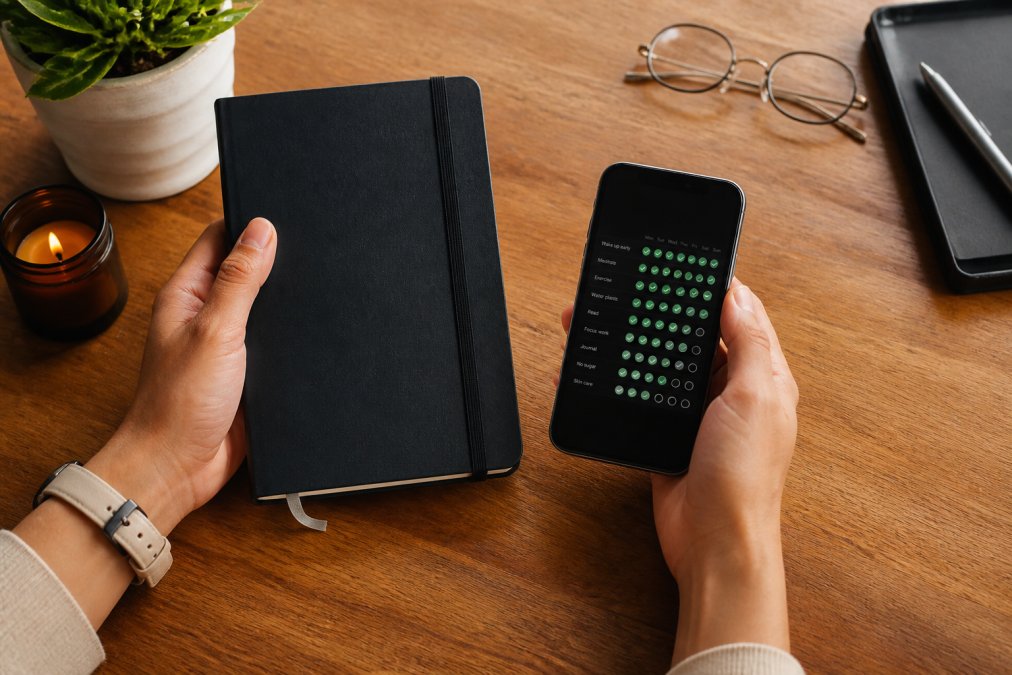
The most effective personal growth systems combine physical and digital tools. A physical journal creates intentionality; a digital tracker creates accountability. Your system might look like: morning journaling in a physical journal (5 minutes), evening habit tracking in an app (2 minutes), weekly reflection using a Clarity Flow Tools workbook (15 minutes).
Track Progress Without Obsession
Track the inputs (did you meditate?), not just the outputs (do I feel better?). Inputs are under your control. When you track inputs, you build confidence in your ability to execute.
Check your progress weekly, not daily. Weekly checking shows patterns without creating anxiety about individual days.
Overcoming Psychological Barriers to Consistency
Even with the right tools, psychological barriers derail progress.
The motivation myth. Consistency creates motivation, not the other way around (peer-reviewed research). You don't feel like meditating, so you meditate anyway. After a week, you feel calmer, so you want to meditate.
Perfectionism paralysis. Overthinkers often abandon a system after one missed day. The reality: consistency is about average behavior. Missing one day out of 30 is 97% consistency. One missed day doesn't erase the previous 29.
Analysis paralysis. Too many choices create decision fatigue. Pick one tool, use it for 30 days, then evaluate. Starting imperfectly beats planning perfectly.
Privacy concerns. If privacy matters to you, prioritize Clarity Flow Tools (instant download, no tracking) and The Five Minute Journal (physical, completely private) over apps that require accounts.
The "this won't work for me" belief. This belief is self-fulfilling. Commit to 30 days of genuine engagement, then assess. Most people who quit early quit because they didn't give the tool time to work.
Personal growth isn't complicated. It requires the right tools, realistic expectations, and consistency. The self growth tools for adults outlined here address different aspects of growth. The most effective approach combines them.
Start with Clarity Flow Tools if you want structured, app-free guidance designed specifically for overthinkers and people with social anxiety. Add a meditation app or journaling practice once your foundation is solid. Build your system incrementally, and you'll create change that lasts.
Frequently Asked Questions
What makes simple self growth tools for adults different from general self-help resources?
Simple self growth tools for adults are designed specifically around adult schedules, psychology, and real-world constraints. They focus on behavioral change and habit formation rather than theory. Tools like Clarity Flow Tools use evidence-based frameworks tailored to introverts and overthinkers, addressing specific challenges adults face: social anxiety, racing thoughts, and maintaining consistency without relying on willpower alone. The key difference is actionability, they provide step-by-step systems you can implement immediately, not just concepts to understand.
How do daily reflection prompts for adults help with personal growth?
Daily reflection prompts create a structured space for self-awareness, which is foundational to lasting change. When you answer prompts consistently, you identify patterns in your thinking and behavior, clarify your values, and track progress over time. Research in positive psychology shows that morning and evening reflection increases clarity and reduces anxiety. Tools like The Five Minute Journal use prompts designed to take only minutes daily, making them sustainable. For overthinkers especially, guided prompts prevent rumination by directing your thoughts toward actionable insights rather than circular worry.
What are the best practices for consistent self-improvement without losing motivation?
The best practices for consistent self-improvement focus on removing friction and building identity-based habits rather than relying on motivation. Start with one small habit, track it visually, and celebrate small wins. Combine tools that match your personality: if you're introverted, choose app-free or private digital options. Use accountability systems like habit trackers or community features. Most importantly, expect inconsistency, missing one day doesn't mean failure. Research shows that consistency matters more than perfection, and that pairing your growth practice with an existing routine (like morning coffee) makes it stick. Personal development habit trackers help you see patterns and adjust rather than abandon the system.
Can digital tools and workbooks really help with social anxiety and overthinking?
Yes, when they're evidence-based and address the specific mechanisms of anxiety. Digital tools work best when they provide frameworks for managing racing thoughts, not just relaxation. Clarity Flow Tools and similar workbooks teach cognitive techniques, like thought-stopping, reframing, and exposure planning, that rewire how you respond to anxiety. Meditation apps like Headspace address the physical symptoms. The combination works: a workbook teaches you the strategy, and consistent practice through tracking builds the neural pathways. The key is using them as systems, not one-time reads. Adults see results when they return to the same tool repeatedly over weeks, not days.
How do I know which self growth tool is right for my personality and needs?
Start by identifying your primary barrier: Is it lack of clarity (try journaling or workbooks), racing thoughts (try meditation), lack of motivation (try gamified trackers), or skill gaps (try structured courses)? Consider your format preference: Do you prefer app-free access, or does gamification motivate you? Are you introverted and prefer private tools, or do you thrive with community accountability? Take a free trial of 2-3 tools for one week each. Track which one you actually return to, that's your answer. Most adults benefit from combining tools: a workbook for structure, a tracker for habit-building, and meditation for stress reduction. Your best tool is the one you'll consistently use.